Septic Pumping in Blue Springs, MO — Fast, Professional & Available 24/7
Eastern Jackson County septic service for backups, full tanks & scheduled pump-outs.
When you need septic tank pumping in Blue Springs MO, you need a calm, capable team that can help you understand what is happening—not pressure you into services you may not need. Pioneer Springs Plumbing provides responsive septic pumping for eligible residential and commercial properties across Blue Springs and nearby eastern Jackson County communities.
Whether sewage is backing up into a shower, the toilet is bubbling, the yard is wet over the septic area, or it is simply time for routine maintenance, our team will assess the situation, pump accessible tanks, and explain the next step in plain language. Established in 2014, we bring local plumbing experience, four fully equipped service vehicles, and 24/7 emergency availability.
Call Now for Septic PumpingCall (816) 427-6868 for same-day availability, emergency guidance, and clear septic service recommendations.
- Septic pumping for qualifying residential and commercial properties
- Help identifying septic, private sewer-line, and possible city-sewer concerns
- Clear communication about tank access, pumping scope, and next steps
- 24/7 emergency response for urgent plumbing and wastewater issues
Emergency Septic Pumping Backed by Local Plumbing Experience
A straightforward, property-first approach when wastewater problems cannot wait. A septic backup, sewer smell, or unexplained wet area can be stressful. Pioneer Springs Plumbing approaches every call with practical guidance, respectful service, and a clear explanation of what we observe. We do not assume every backup is caused by a septic tank, and we do not promise that pumping alone will repair a drain-field failure, broken sewer line, or municipal sewer issue.
Our team helps homeowners, landlords, property managers, and businesses make informed decisions about septic pumping, drain cleaning, sewer camera inspections, and related plumbing repairs. You get an honest assessment of accessible system conditions and a clear path forward.
Septic Tank Pumping Near Blue Springs Neighborhoods and Rural-Edge Properties
Serving properties near MO-7, Adams Pointe, Chapman Farms, Lake Remembrance, and eastern Jackson County communities.
Blue Springs is primarily served by municipal sewer in many neighborhoods, but septic systems remain relevant for properties on the city's edges, larger lots, rural-residential areas, lake-area homes, and nearby unincorporated communities. Pioneer Springs Plumbing helps property owners determine whether their concern appears related to an on-site septic system, private sewer lateral, drain line, or a potential public-sewer problem.
- Blue Springs areas: MO-7 corridor, Adams Pointe, Chapman Farms, Waterfield, Plaza Estates, Little Blue Valley, and rural-edge properties
- Nearby communities: Grain Valley, Lee's Summit outskirts, Lake Lotawana, Lake Tapawingo, Lone Jack, Buckner, Oak Grove, and Independence outskirts
- Regional coverage: Blue Springs and eastern Jackson County, subject to service availability, system type, and site access — see all service areas
Specialized Septic Pumping for Tanks, Pump Chambers & On-Site Wastewater Systems
A practical approach to septic tanks, two-compartment systems, alarms, and drainage concerns.
Septic pumping is not the same as clearing a simple sink clog. A septic system can include a tank, inlet and outlet baffles, an effluent filter, a pump chamber, floats, alarms, distribution components, and a drain field. Missouri also recognizes several on-site wastewater approaches, including conventional subsurface systems, aeration units, mound systems, sand filters, and lagoons.
Pioneer Springs Plumbing starts by listening to the symptoms, asking about the property and system history, and identifying whether pumping is likely to help. If your issue points to a sewer line, drain blockage, mechanical component, or drain-field concern, we will explain the appropriate next step rather than treating every issue as "just a full tank."
What Happens When a Septic System Fails or Fills Up?
Slow drains, sewage odors, wet yards, and backups can signal a serious wastewater problem. A septic system relies on the tank to separate solids from wastewater before treated effluent moves toward the drain field or other approved disposal component. When solids build up, filters clog, components fail, water use overwhelms the system, or the drain field cannot accept wastewater, sewage may back up into fixtures or surface outdoors.
Common warning signs include slow drains throughout the home, gurgling toilets, a shower filling when a toilet is flushed, sewage odor near the yard, wet ground around the drain field, unusually green grass, and wastewater backing up into tubs, showers, or floor drains.
- Potential sewage exposure inside or outside the property
- Damage to flooring, walls, furnishings, and finished areas after a backup
- Health and sanitation concerns for occupants, pets, and neighbors
- Increased risk of drain-field damage when solids move beyond the tank
- Possible confusion between a septic problem, private sewer blockage, and public sewer issue
Prevent Septic Problems with Timely Pumping and Inspections
A maintenance schedule should fit your household, tank size, usage, and system type. In general, the EPA advises having household septic systems inspected about every one to three years and pumped about every three to five years, depending on household size, tank size, water use, garbage-disposal use, and solids accumulation. Alternative systems with pumps, floats, alarms, or other mechanical components may need more frequent inspection, often annually.
| Maintenance Task | What It Involves | Typical Timing | Why It Matters |
|---|---|---|---|
| System history review | Review prior pumping, repairs, alarms, and known issues | Before scheduling or at visit | Helps identify overdue maintenance |
| Tank pumping | Remove accumulated wastewater, scum, and sludge | Often every 3–5 years | Helps prevent solids from moving toward the drain field |
| System inspection | Assess tank condition and accessible components | About every 1–3 years | Identifies concerns before they become emergencies |
| Alternative-system check | Review pumps, floats, alarms, and mechanical components | Often yearly | Important for systems with electrical or mechanical parts |
| Service documentation | Record completed work and recommendations | At or after service | Supports maintenance planning and property records |
- Schedule pumping before major household events, holidays, or extended guest stays.
- Spread laundry loads across the week instead of sending heavy water use into the system all at once.
- Keep vehicles, heavy equipment, and construction materials off the drain field.
- Save past pumping and repair records for your home, future buyers, or property managers.
Who Needs Septic Tank Pumping in Blue Springs?
Septic pumping is important for any property that uses a private on-site wastewater system rather than a municipal sewer connection. Because many Blue Springs properties are sewer-served, it is important to confirm what system serves your home or business before scheduling septic work.
How Missouri Weather and Household Use Affect Septic Systems
Heavy rain, freeze-thaw cycles, water use, and soil conditions can reveal system weaknesses. These conditions do not automatically cause septic failure, but they can expose existing problems such as overloaded tanks, damaged lines, clogged filters, weak pump components, poor drainage, or drain-field saturation.
- Summer: Higher water use, guests, laundry, and kitchen activity can overload a neglected system.
- Winter: Freezing conditions can affect exposed lines, lids, pumps, or components.
- Spring: Heavy rain and saturated soil can reveal drain-field and drainage concerns.
- Fall: A useful time to address maintenance before holidays and winter weather.
Common Septic System Types in Blue Springs and Eastern Jackson County
Different systems need different maintenance, pumping, and troubleshooting approaches. On-site wastewater systems vary by property layout, soil conditions, system age, local requirements, and wastewater volume.
| System Type | Typical Setup | Common Concern | Service Consideration |
|---|---|---|---|
| Conventional septic system | Septic tank plus drain field | Sludge buildup, backups, slow drains | Routine pumping and condition assessment |
| Two-compartment tank | One tank divided into two chambers | Solids movement, filter or baffle concerns | Proper pumping of accessible chambers |
| Pump-assisted system | Tank, pump chamber, float, and alarm | Alarm activation, pump or float failure | Prompt assessment and mechanical service may be needed |
| Aerobic treatment unit | Mechanical treatment components | Alarm, aerator, or maintenance issue | Often needs more frequent professional inspection |
| Mound or sand-filter system | Engineered treatment/disposal area | Hydraulic overload or component concerns | Requires system-specific evaluation |
| Lagoon system | Wastewater stabilization pond | Water level, maintenance, access concerns | Service needs depend on the specific design |
Pioneer Springs Plumbing will explain what can be addressed through pumping and what may require additional diagnostic work or a specialized on-site wastewater provider.
Our 6-Step Septic Tank Pumping Process
Know what to expect before the truck arrives at your property.
- 1Initial call and symptom review
We ask about backups, odors, slow drains, alarms, property location, tank history, and whether the home is known to be on septic.
- 2Scheduling and access planning
We discuss tank location, lid accessibility, driveway or truck access, gates, pets, and any conditions that could affect the visit.
- 3On-site assessment
Our technician reviews the reported issue, checks accessible conditions, and helps determine whether pumping appears appropriate.
- 4Tank pump-out
When the tank is accessible and pumping is the right service, we remove accumulated contents using appropriate equipment.
- 5Visible component review
Where accessible, we note visible concerns involving baffles, filters, lids, tank condition, alarms, or related drainage conditions.
- 6Clear next-step guidance
We explain what was completed, provide service documentation, and recommend maintenance, repairs, drain cleaning, sewer camera inspection, or further evaluation when needed.
What's Included in Our Septic Tank Pumping Service
Every property and septic system is different. Pioneer Springs Plumbing explains the scope before work begins so you know what is included, what requires separate approval, and what may need additional evaluation.
A standard septic pumping visit may include:
- Pre-service discussion of symptoms, service history, and property access
- On-site review of accessible septic tank location and conditions
- Pump-out of the accessible septic tank or chambers, as applicable
- Basic visual observation of accessible lids, baffles, filters, or components
- Explanation of visible findings and recommended next steps
- Service documentation for your property records
- Recommendations for additional plumbing, drain, sewer, or septic-related service when needed
Key Advantages of Choosing Pioneer Springs Plumbing
When septic concerns affect your home or business, you need more than a vague arrival window or a confusing sales pitch. Pioneer Springs Plumbing focuses on clear communication from the first call through final recommendations.
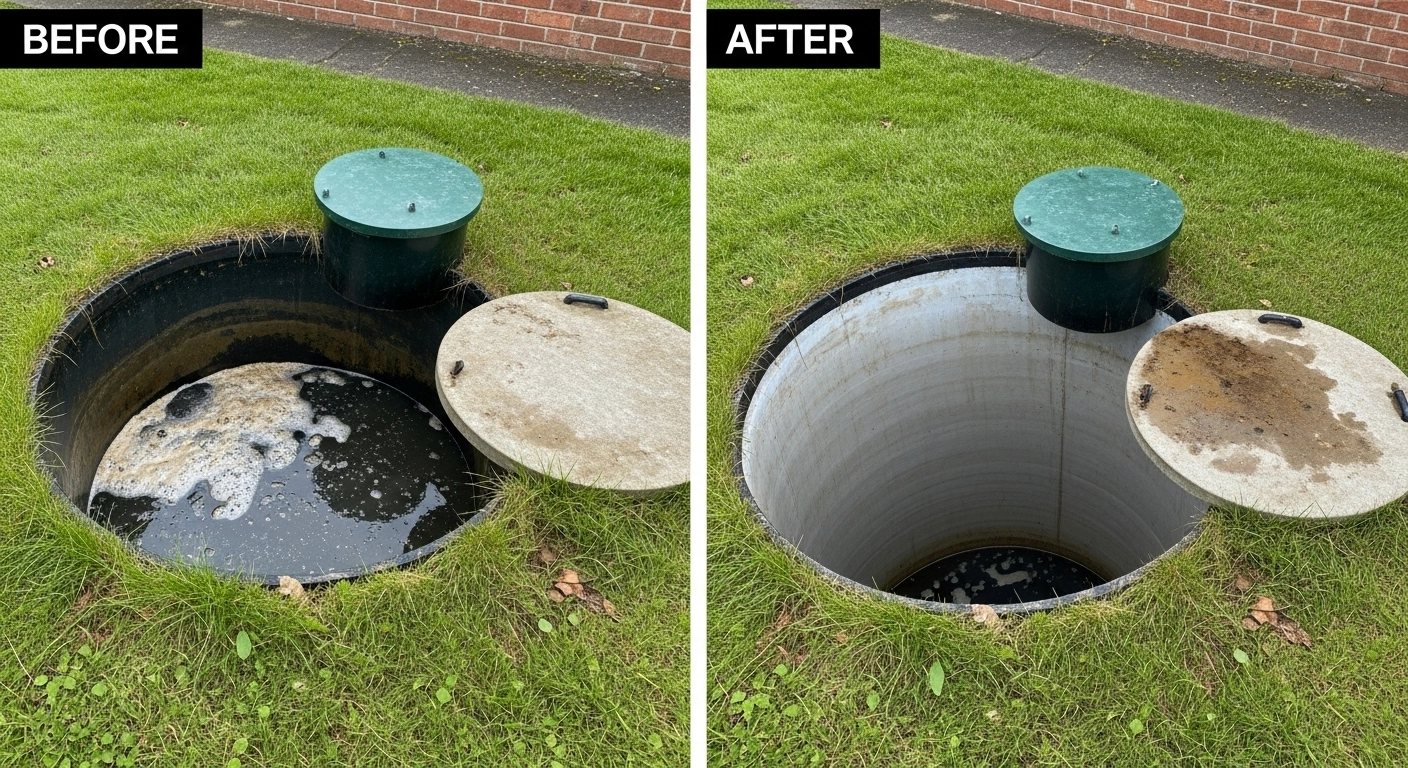
Septic Pumping Outcomes for Blue Springs-Area Properties
What changes after your tank is pumped and the system is assessed.
Many callers contact us after noticing a new odor, slow drains in multiple rooms, a gurgling toilet, or a backup in a shower or tub. Others simply do not know when the tank was last serviced. The immediate goal is to restore clarity: identify what is happening, complete appropriate pumping when needed, and outline the next best step.
Unknown pumping history or a tank that may be overdue for maintenance
A documented pump-out and a clearer maintenance plan
Slow drains, wastewater odors, or uncertainty about a backup
An on-site assessment and guidance about septic, sewer-line, or drain-field next steps
Stress about a yard, drain, or wastewater symptom
Plain-language recommendations without pressure or guesswork
How We Pump, Assess, and Protect Septic Systems
Professional septic pumping requires more than opening a lid and removing liquid. Proper service considers truck access, hose routing, tank location, safe work areas, chamber configuration, solids removal, and the condition of accessible components. We discuss access needs before arrival and advise homeowners to keep vehicles off drain-field areas, secure pets, and avoid unnecessary water use if a backup is occurring.
- Equipment and hose setup planned around safe property access
- Professional pump-out methods for accessible septic tanks and chambers
- Careful attention to lids, access points, visible baffles, and filters where reachable
- Recommendations for septic risers when repeated excavation or difficult lid access is an issue
- Clear guidance when a concern exceeds the scope of routine pumping
Should You Pump the Tank or Repair a Septic System Problem?
Pumping removes accumulated solids, but it cannot repair every cause of a backup. A full tank can contribute to slow drains, odors, and backups, but pumping is not a guaranteed cure for a damaged drain field, collapsed line, failed pump, cracked tank, clogged effluent filter, broken baffle, or municipal sewer concern.
| Situation | Pumping May Help | Repair or Further Evaluation May Be Needed |
|---|---|---|
| Tank is overdue for maintenance | Yes | Possibly, if other issues are found |
| Solids are accumulating normally | Yes | No, unless visible concerns appear |
| Slow drains and sewage backup | Possibly | Yes, if symptoms continue after pumping |
| Wet ground over drain field | Sometimes | Often requires septic-system evaluation |
| Septic alarm is active | Not always | Pump, float, electrical, or mechanical assessment may be needed |
| Damaged tank, baffle, or lid | Limited benefit | Repair or replacement may be needed |
| Private sewer line blockage | No | Drain cleaning or camera inspection may be needed |
When further service may be appropriate:
- Wastewater backups return shortly after pumping
- The yard remains wet, smelly, or unusually lush over the drain-field area
- A septic alarm continues to sound
- A tank, pipe, lid, baffle, or filter shows damage
- Sewer camera inspection indicates a separate drain or sewer-line problem
What Does Septic Tank Pumping Cost in Blue Springs, MO?
Straightforward estimates based on your property, tank access, and service needs. Emergency needs, difficult tank access, additional excavation, multiple chambers, system condition, and travel requirements can all affect the final cost.
| Cost Factor | Why It Matters |
|---|---|
| Tank size and chamber configuration | Larger or multi-chamber tanks may require more time and capacity |
| Lid depth and tank access | Buried, hidden, or difficult-to-reach lids may require additional work |
| Driveway and hose access | Long hose runs or restricted access can affect setup time |
| Amount of material in the tank | Heavier solids and volume can affect service requirements |
| Emergency timing | After-hours, weekend, or urgent dispatch may involve different pricing |
| System issues found | Filters, pumps, baffles, lines, or drain-field concerns may require follow-up work |
| Location | Properties outside the normal dispatch area may require additional planning |
Which Blue Springs Properties Need Septic Tank Pumping?
Start by confirming whether your property uses septic or municipal sewer. If you are unsure, review your home records, ask the seller or prior owner, contact the appropriate local authority, or call Pioneer Springs Plumbing for guidance on the symptoms you are experiencing.
You may need septic pumping if:
- Your property has a septic tank and no recent pumping record
- You have lived in the home for several years without a system inspection
- Multiple drains are slow or toilets gurgle
- Sewage is backing up into a shower, tub, toilet, or floor drain
- A septic alarm is active
- The yard is wet, spongy, odorous, or unusually green near the drain-field area
- You are buying or selling a home with an on-site wastewater system
- Your household size, water use, or garbage-disposal use has increased
Septic Tank Pumping for Commercial and Multi-Unit Properties
Support for businesses, landlords, facilities, and managed properties with on-site wastewater systems. Commercial and multi-unit properties can place substantial demand on septic systems—a busy kitchen, employee restroom use, tenant turnover, laundry activity, seasonal traffic, or a high-occupancy building can accelerate solids accumulation and expose maintenance gaps.
| Commercial Service Need | How We Help |
|---|---|
| Scheduled pumping | Coordinate service around property operations and access |
| Wastewater backup response | Assess symptoms and identify immediate safety steps |
| Multi-unit property planning | Discuss system use, service history, and access logistics |
| Drain and sewer troubleshooting | Provide related drain cleaning or camera-inspection support |
| Maintenance documentation | Provide available service records and recommendations |
Commercial properties may include:
- Small offices and retail properties with on-site systems
- Rental homes and multi-unit properties
- Churches, community facilities, and event spaces
- Rural or edge-of-metro commercial properties
- Lake-area businesses and managed properties
- Agricultural-adjacent sites, subject to system type and scope
Benefits of Hiring Septic Pumping Professionals in Blue Springs
Professional pumping helps remove accumulated solids before they create larger operational problems. It also gives property owners a chance to discuss recurring symptoms, system history, access challenges, and signs that may require more than a routine pump-out.
Why DIY Septic Pumping Is Dangerous
Protect yourself, your family, and your property by leaving septic work to trained professionals. A septic tank is not a safe DIY project—septic systems can contain harmful gases, bacteria, pathogens, and unstable conditions. Never enter a septic tank, lean into an open tank, or attempt to pump, repair, or handle wastewater without appropriate training and equipment.
- Septic gases can be toxic or displace oxygen
- Wastewater can expose people to harmful bacteria and pathogens
- Improper lid handling can create a fall hazard
- DIY work can damage baffles, filters, pumps, or drain-field components
- Incorrect diagnosis can delay repair of a sewer-line, city-sewer, or drain-field problem
Answers to Common Septic Pumping Questions in Blue Springs
Clear answers for homeowners, buyers, sellers, and property managers.
How do I know if my septic tank needs pumping?
Common signs include slow drains throughout the house, gurgling toilets, sewage odors, backups in tubs or showers, a wet or unusually green area near the drain field, or an overdue maintenance history. A professional evaluation can help determine whether pumping is appropriate.
How often should I pump my septic tank in Missouri?
Many household systems are inspected every one to three years and pumped every three to five years, per EPA guidance. Your ideal schedule depends on tank size, household size, water habits, garbage-disposal use, and solids accumulation.
Can a full septic tank cause slow drains in every room?
It can contribute to widespread slow drainage, gurgling, and backups. However, similar symptoms may also come from a main drain blockage, private sewer-line issue, or another plumbing problem.
Why is sewage backing up into my shower or tub?
A backup may occur when wastewater cannot leave the plumbing system properly. Possible causes include a full septic tank, clogged drain line, blocked sewer lateral, pump failure, drain-field issue, or public sewer concern. Stop using water if possible and call (816) 427-6868 for help.
Is my septic tank full, or is my drain field failing?
Only an on-site assessment can determine that. Pumping can remove accumulated solids, but persistent wet ground, odors, or repeated backups after pumping may point to a drain-field or broader system concern.
Why does my yard smell like sewage or look unusually green?
Odor, standing water, lush grass, or spongy ground near the drain-field area can indicate wastewater surfacing or drainage trouble. Avoid the area, reduce water use, and schedule professional evaluation.
Are gurgling toilets a sign my septic tank needs pumping?
They can be. Gurgling may also indicate a drain or sewer-line blockage, so it is important not to assume the cause without assessment.
Can I use the toilet if my septic system is backing up?
Avoid using toilets, sinks, showers, dishwashers, and washing machines until the issue is assessed. Adding water may worsen the backup.
What should I do before the septic pumping truck arrives?
If you know where the tank lid is, clear the area of vehicles, outdoor furniture, and obstacles. Secure pets, unlock gates, provide access information, and avoid doing laundry or using large amounts of water before the appointment.
Do I need to dig up my septic tank lid before service?
Not always. Tell us what you know about the tank location and whether lids are visible. We will discuss access needs before scheduling. Additional excavation or locating work may affect scope and pricing.
Does a garbage disposal mean I need pumping more often?
It can. Garbage disposals add food solids and grease to the wastewater stream, which may increase solids accumulation and shorten the pumping interval.
Are septic additives necessary?
Routine additives are not a replacement for pumping and inspection. Use caution with products that promise to eliminate pumping needs. Ask a qualified professional before adding chemicals or treatments to your system.
Can I pour grease, wipes, paint, or drain cleaner into a septic system?
No. Avoid flushing wipes—even products labeled "flushable"—and do not pour grease, oils, paint, pesticides, harsh chemicals, or other hazardous materials down drains. These materials can interfere with system performance and create environmental concerns.
What happens to the waste after the tank is pumped?
Wastewater and septage must be managed and disposed of through appropriate, approved processes. Ask your service provider for details about the handling process used for your appointment.
Is this a septic problem or a city sewer backup?
Blue Springs has municipal sewer service in many areas. If you believe a public sewer main may be involved, the City of Blue Springs lists (816) 228-0110 for sewer backup reporting and (816) 228-0195 for suspected sewer-main issues during business hours. Pioneer Springs Plumbing can also help assess whether your symptoms point toward a private plumbing or septic concern.
Should I get a septic inspection before buying a home?
Yes. EPA recommends that prospective buyers understand the system and have it inspected before purchase. Pumping and inspection are not necessarily the same service, so ask what the inspection includes and request available maintenance records.
You're Supported From the First Call to the Next Maintenance Plan
Honest guidance, clear documentation, and responsive local service. Pioneer Springs Plumbing stands behind a customer-first approach: arrive prepared, communicate clearly, respect your property, and explain what we find. Septic systems can have complex causes, so we do not make blanket promises that a pump-out will solve every drain-field, sewer-line, mechanical, or municipal sewer issue.
If a wastewater concern continues after service, we will help explain the next diagnostic or repair option based on the symptoms and accessible system findings.
Pioneer Springs Plumbing1100 MO-7, Blue Springs, MO 64014
Phone: (816) 427-6868 | Email: plumbersbluespringsmo@gmail.com
Credentials That Support Safe Septic and Wastewater-Related Service
Wastewater and plumbing work can involve local, county, state, and property-specific requirements. Pioneer Springs Plumbing emphasizes professional service practices, clear communication, and appropriate scope identification for each job.
Because septic and on-site wastewater requirements can vary by system and jurisdiction, confirm the scope of work, permits, inspections, and specialized credentials required for your property before service begins. See our About page.
Emergency Septic Pumping in Blue Springs, MO
Rapid support when sewage backs up, toilets bubble, or wastewater cannot drain. When your septic is backing up, every minute matters—sewage in a shower, tub, toilet, or floor drain can create sanitation concerns and property damage.
Call (816) 427-6868 if you notice:
- Sewage backing up into a shower, tub, toilet, or floor drain
- Multiple slow drains and gurgling fixtures
- A septic tank overflowing or wastewater surfacing
- Strong sewage odor indoors or outside
- A septic alarm or suspected pump-related issue
- Sudden wastewater problems after heavy rain
- A possible private sewer-line backup
Emergency response process:
- Immediate phone discussion to identify urgency and reduce further water use
- Dispatch planning based on location, conditions, and available access
- On-site assessment of septic, drain, sewer, or related plumbing symptoms
- Pumping, drain service, camera inspection, mitigation, or next-step recommendations as appropriate
- Clear explanation of when to contact the City of Blue Springs for a possible public-sewer issue
Insurance Claim Support for Septic and Sewer Backup Incidents
A sewage or wastewater backup may damage flooring, drywall, personal property, or finished living areas. Insurance coverage varies widely by policy, cause of loss, endorsements, exclusions, and the distinction between sewer backup, septic failure, groundwater, and maintenance-related issues.
Pioneer Springs Plumbing can provide:
- Initial notes about reported symptoms and visible conditions
- Available photographs of work areas, when appropriate
- Service invoices and completed work descriptions
- Recommendations for related plumbing, restoration, or further evaluation
- Documentation to share with your insurer, adjuster, or restoration provider
Warranty Coverage for Septic-Related Plumbing Work
Know what is covered before repairs or replacements begin. Warranty terms vary depending on the service, installed component, manufacturer, system condition, and whether the problem involves a septic tank, pump, float, alarm, drain line, sewer line, or another plumbing component.
| Coverage Type | Typical Application |
|---|---|
| Workmanship | May apply to qualifying installation or repair labor |
| Parts and equipment | Manufacturer terms may apply to new approved components |
| Service documentation | Provides a record of completed work and recommendations |
| Pumping service | Does not guarantee correction of unrelated drain-field, sewer-line, or structural system problems |
Specific warranty terms should be provided in writing for the approved scope of work. Septic pumping removes tank contents but cannot guarantee the condition or future performance of inaccessible or failing system components.
Four Equipped Service Vehicles Serving Blue Springs and Nearby Areas
Pioneer Springs Plumbing operates four fully equipped service vehicles to support responsive service across Blue Springs, eastern Jackson County, and surrounding communities. Our teams arrive prepared to assess common plumbing, drainage, sewer, and wastewater-related concerns and to explain the appropriate next step.
- Equipment for plumbing diagnostics, drain service, and sewer-related evaluation
- Septic pumping resources scheduled according to tank access, service scope, and property needs
- GPS-supported dispatch coordination for local response
- Professional tools and safety equipment for residential and commercial service
- Stocked common plumbing parts to address many related repairs efficiently
Flexible Payment Options for Septic and Plumbing Projects
Routine septic pumping is typically a planned maintenance cost. However, a wastewater problem can reveal a larger need, such as a sewer-line repair, pump replacement, access-riser installation, plumbing repair, or other approved project. Pioneer Springs Plumbing can discuss available payment or financing options for qualifying larger plumbing projects, subject to approval and program terms.
- Options may be available for eligible repair or replacement work
- Clear explanation of approved scope and pricing before work begins
- Support for homeowners and property managers planning larger projects
- No assumption that financing is needed for routine pumping alone
Recognition for Plumbing Service Excellence
Trust should be earned through verifiable service, credentials, and customer care. Recognition referenced across our website includes:
- Best Plumber in Blue Springs
- Top-Rated Plumbing Company in Eastern Jackson County
- Award-Winning Customer Service in Plumbing
- Excellence in Plumbing Services Award
- Quality Craftsmanship Plumbing Award
Senior and Military Discounts on Eligible Plumbing Services
Pioneer Springs Plumbing is proud to support qualifying senior and military customers with available discounts on eligible plumbing services. Ask our team about current promotions when you call to schedule septic pumping, drain service, sewer inspection, or another plumbing appointment.
- Senior discounts on qualifying services — ask for current terms
- Military and veteran discounts on eligible work — ask for current terms
- $50 OFF Any Service — first-time customer savings, where applicable
- Seasonal promotions for selected plumbing services
Discounts may not be combined with every offer, emergency rate, specialized service, or major project. Confirm current eligibility when booking.
Septic and Plumbing Service Hours in Blue Springs, MO
Pioneer Springs Plumbing is available around the clock for emergency plumbing and wastewater-related concerns. Scheduled septic pumping availability depends on location, tank access, equipment scheduling, and the specific service needed, but urgent calls are handled with priority assessment and clear communication.
Phone: (816) 427-6868 | Email: plumbersbluespringsmo@gmail.com | Website: plumbersbluespringsmo.com
What to Look for in a Blue Springs Septic Pumping Provider
Not all providers offer the same scope, availability, or diagnostic capabilities. Instead of relying on generic "best" claims, compare providers based on the information that matters when your septic system, drain line, or wastewater plumbing is involved.
| Feature to Compare | Pioneer Springs Plumbing Approach | What to Ask Any Provider |
|---|---|---|
| Local service coverage | Blue Springs and surrounding eastern Jackson County areas | Do you serve my location and system type? |
| Emergency availability | 24/7 emergency plumbing and wastewater-related response | Is after-hours response available? |
| Scope clarity | Explains pumping, plumbing, drain, and sewer next steps | What exactly is included in the quoted service? |
| Diagnostic support | Related drain cleaning and sewer camera inspection available | Can you help if pumping does not solve the issue? |
| Communication | Plain-language recommendations and available documentation | Will I receive clear findings and service records? |
| Property respect | Access planning, pet coordination, yard and driveway awareness | How will you protect access areas and explain work? |
The right provider should be willing to explain limitations. A professional company will not claim that pumping alone can fix every wastewater problem before assessing the property. Explore our full services catalog.
Contact Pioneer Springs Plumbing for Septic Tank Pumping in Blue Springs, MO
Speak with a local plumbing professional about backups, full tanks, odors, slow drains, and scheduled service. If you are unsure whether your property is on septic or city sewer, have an upcoming home purchase, notice gurgling toilets, smell sewage near the yard, or need urgent help with a backup, Pioneer Springs Plumbing is ready to help.
Septic Service — Contact Details
Protect your home, wastewater system, and peace of mind today with professional septic tank pumping in Blue Springs MO from Pioneer Springs Plumbing.